Decorations like modern nail art and manicures are widely available today. But how did women in ancient times decorate their nails to make their delicate hands even more beautiful?
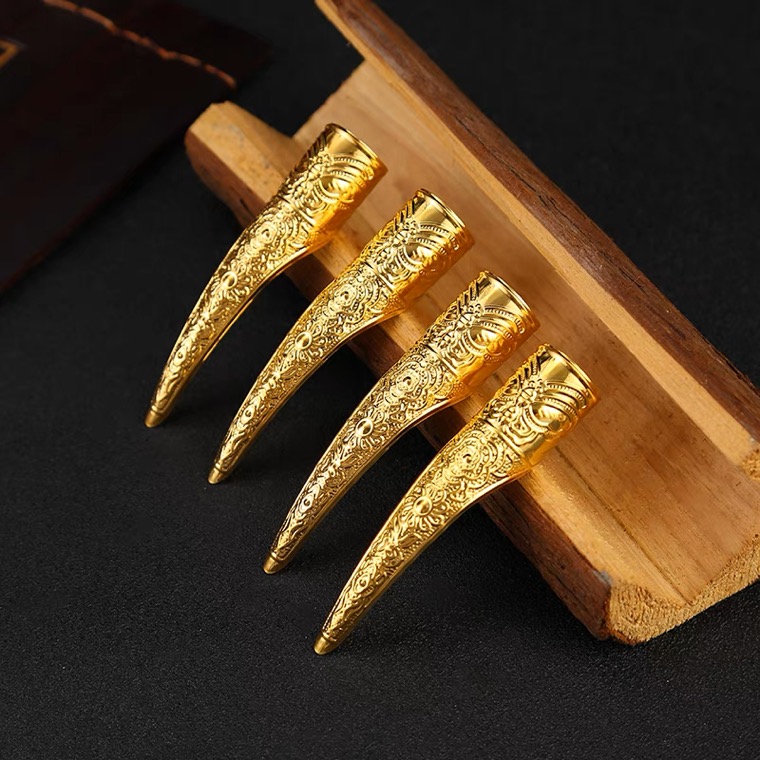
“The pursuit of beauty is a universal desire,” but how to make oneself more beautiful has been an eternal question throughout history. The hands are the most dexterous part of the body and, naturally, where women focus their attention. From descriptions by ancient poets, we can see that women in ancient times were highly admired for their nail art, and poets praised their beauty without reservation. So, what did ancient people used to dye their nails? The most common material used in ancient times was hibiscus, mainly because it was easy to grow and could bloom twice a year. The corrosive nature of this flower can erode the nail’s surface, making it easy to apply colour and maintain it for a long time.
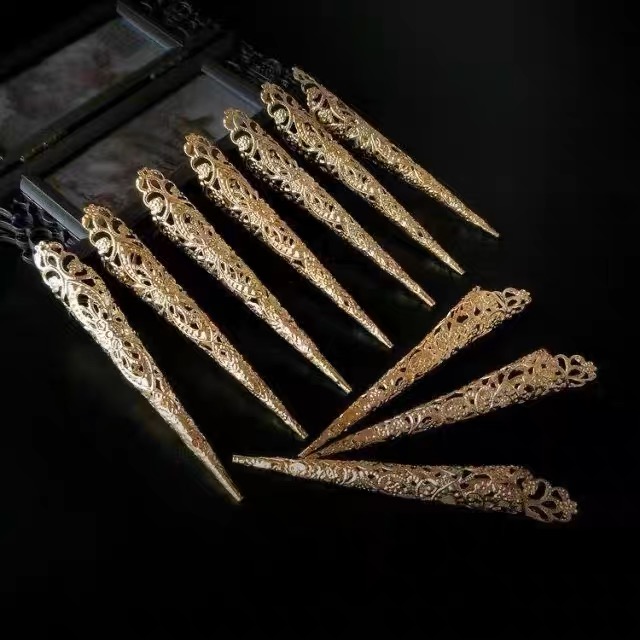
Nail art was trendy in ancient times, but dying the nails seemed inadequate to satisfy a woman’s desire for beauty. With head decorations and necklaces, it is also natural for the hands to have accessories. In addition to the usual bracelets, ancient women also wore nail covers. Why did these nail covers emerge as decoration? This has to do with the habit of ancient women growing long nails. Women in ancient times had to do housework, and long nails were inconvenient. However, this was not a problem for daughters of nobility, so they were accustomed to growing long nails to showcase their status.

Such long nails also required proper protection, which is how to nail covers came into being. Later in the Ming and Qing dynasties, this nail cover was improved to make it more decorative. In particular, the Qing imperial family pursued luxury in ornaments, which led to using more precious materials and increasingly exquisite craftsmanship for nail covers.
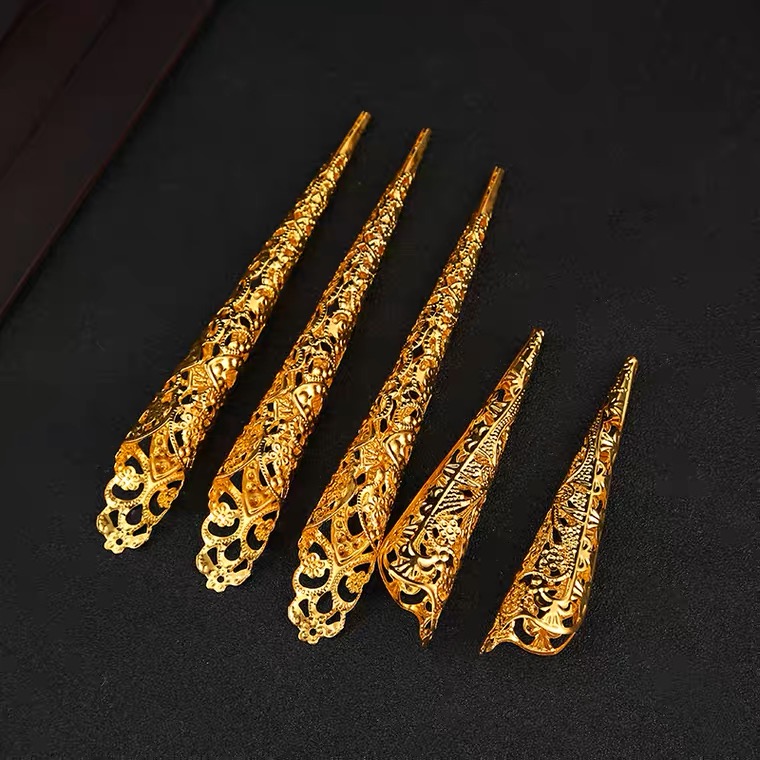
Many different materials were used for nail covers in the Qing dynasty, with metal and jade being the most common. Nail covers were generally about four inches long, slender and slightly curved, with a sharp tip at the end and usually with hollowed-out backs for ventilation. The surface was decorated with auspicious patterns such as flowers, ancient coins, peaches, bats, and characters for good fortune. In the late Qing dynasty, nail covers became more luxurious and were often decorated with precious gems. In addition to protecting long nails from damage, wearing nail covers could also enhance the slim and elongated look of the fingers, which was highly favored by aristocratic women at the time.
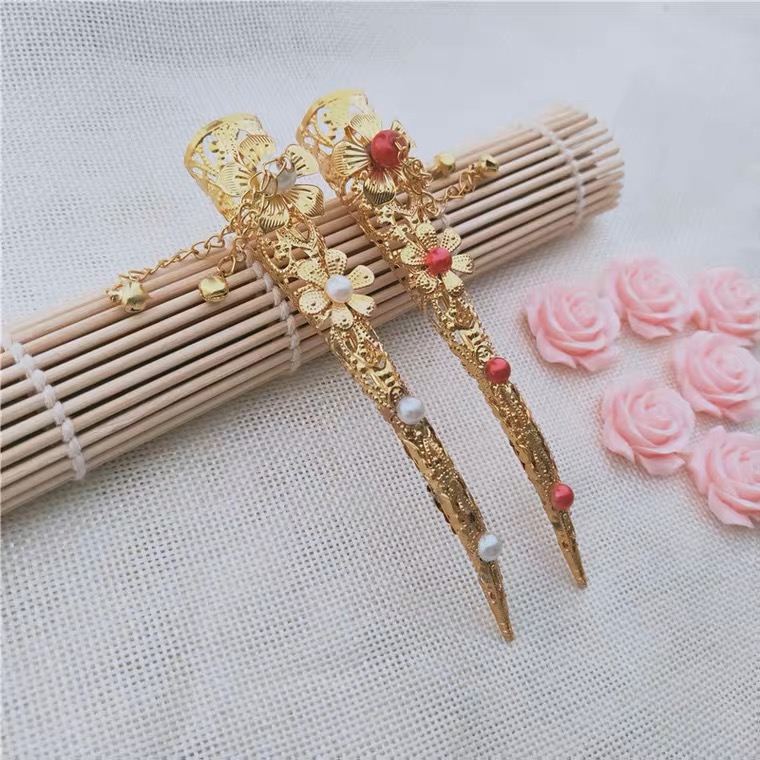
Although ancient materials were not as abundant as today’s, this did not dampen women’s desire for beauty. They used all means possible to make their hands shine. Whether it was natural dyes for their nails or exquisitely crafted nail covers, ancient women may have been even more extravagant than modern women in terms of luxury and opulence.
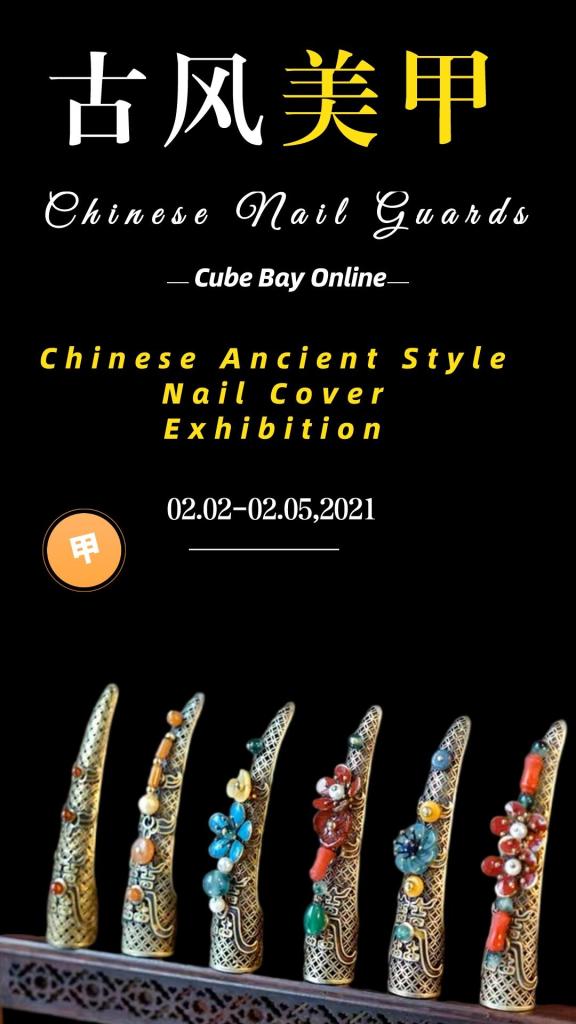
So, now is the time to collect an exquisite Chinese nail covers and catch up with the fashion of the ancients!
please contact: info_cubebay@yeah.net
 Cube Bay Online Art Gallery
留下评论